
All articles · Published 2026-09-20
wind and wind, two unrelated words that look exactly alike: one is /wɪnd/, the other /waɪnd/
The four letters w-i-n-d take up five entries and two pronunciations in Merriam-Webster. They are really two unrelated words that happen to share a spelling: one means moving air, the other means to turn or coil. This piece sorts out the common uses of each family (get wind of, second wind, wind up, wind down, winding road) and then deals with their past tense, wound — which is a trap of its own. Every pronunciation comes with audio, including one sentence that even our synthesized voice got wrong.
One spelling, five dictionary entries
Look up wind in Merriam-Webster and you will find it split into five entries: two nouns and three verbs. But remember one thing and the rest falls into place: these are two different words that are merely spelled the same.
| The "air" family | The "turning" family | |
|---|---|---|
| Pronunciation | /wɪnd/, rhymes with pinned | /waɪnd/, rhymes with find, kind, mind |
| Origin | Old English wind (related to Latin ventus) | Old English windan (to twist, turn) |
| Core meaning | air in motion | to coil, turn, bend |
| Past tense | winded | wound /waʊnd/ |
| Common members | windy, get wind of, second wind | winding, wind up, wind down, unwind, rewind |
The rule of thumb is simple: about air → /wɪnd/; about turning, coiling or bending → /waɪnd/.
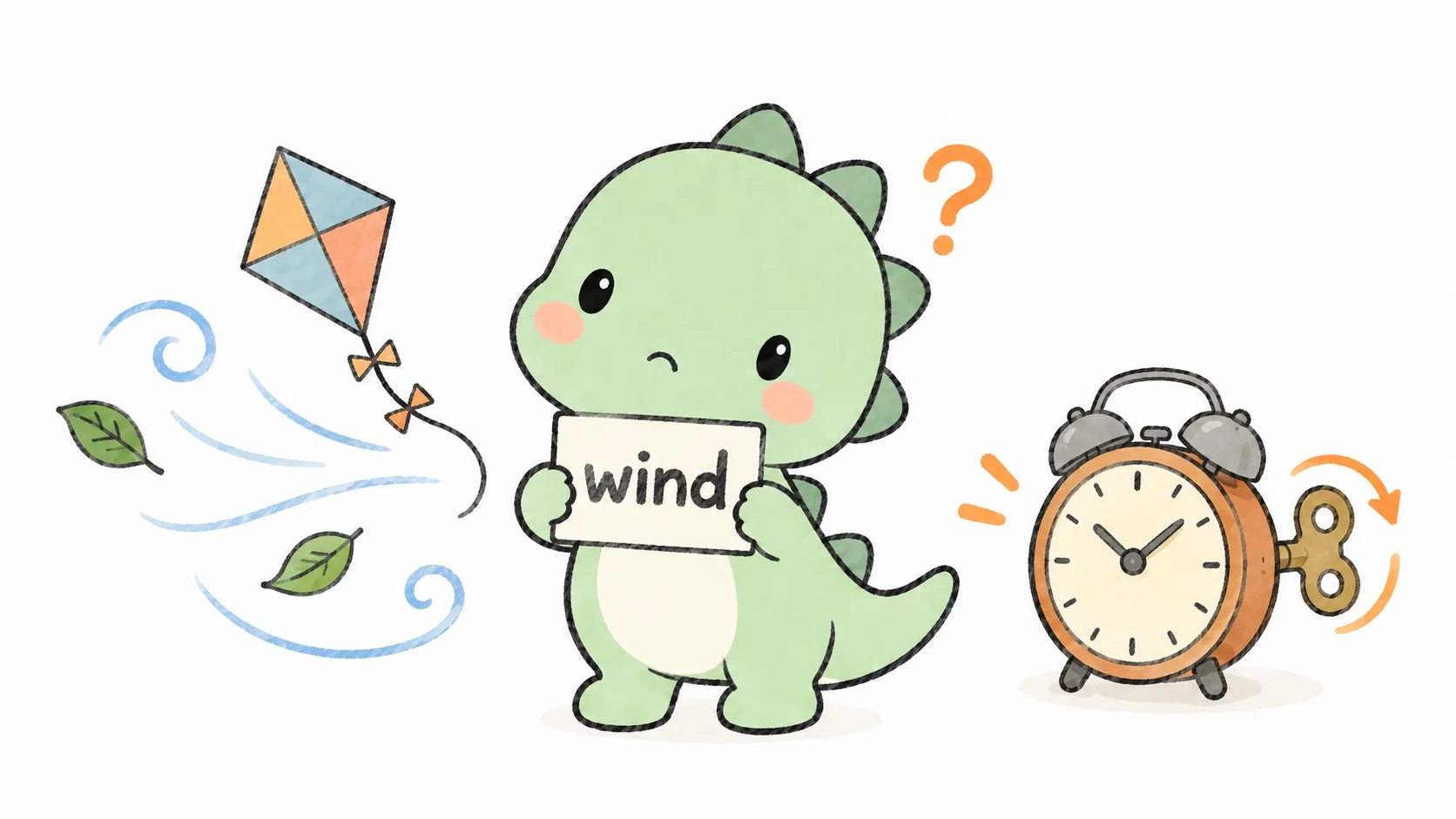
Hear the difference first (all audio in this article is synthesized speech from Azure, not a human recording, slowed to 0.8× speed):
The "air" family: /wɪnd/
Beyond the wind in a weather forecast, the members you meet most in workplace English are figurative:
- get wind of: to hear a rumor of something. The press got wind of the merger. Recorded by 1809, perhaps modelled on French avoir le vent de.
- second wind: the fresh burst of energy after you catch your breath. Originally a hunting term, figurative from 1830. The team got its second wind after lunch.
- the winds of change: a trend or tendency. Merriam-Webster defines this sense as "a force or agency that carries along or influences."
- the winds: wind instruments, and the people who play them.
- winded: out of breath. The long climb winded us. Note that this verb's past tense is winded, not wound.
The adjective windy belongs here too, of course.
The "turning" family: /waɪnd/
The core image of this family is wrapping something round and round; every other meaning grows from it:
- wind a clock / wind a cable: to tighten a spring with a key; to coil a cable.
- a winding road / a winding staircase: a road or staircase that curves. The road itself is doing the winding.
- winding (noun): a coil of wire. The windings in a motor or transformer data sheet are this word — familiar to readers with an engineering background.
- wind up:
- to bring to an end: Let's wind up the meeting by five.
- to end up: We wound up paying twice.
- British business usage: to wind up a company is to liquidate it and close it down; the noun is winding-up. If you see it in a British-style Part 7 passage, nobody is putting a key in the company.
- wind down: to decrease gradually, to slow toward a stop. Orders usually wind down in December. A young phrase, recorded only from 1952.
- unwind: to relax (to loosen what was wound tight); rewind: to wind back.
Listen to these; the vowel in each is the /aɪ/ of find:
wound: a past tense, or an injury?
The past tense and past participle of the "turning" family is wound, pronounced /waʊnd/, rhyming with found and sound. The trouble is that English has another word with exactly the same spelling: wound (an injury), pronounced /wuːnd/, rhyming with tuned.
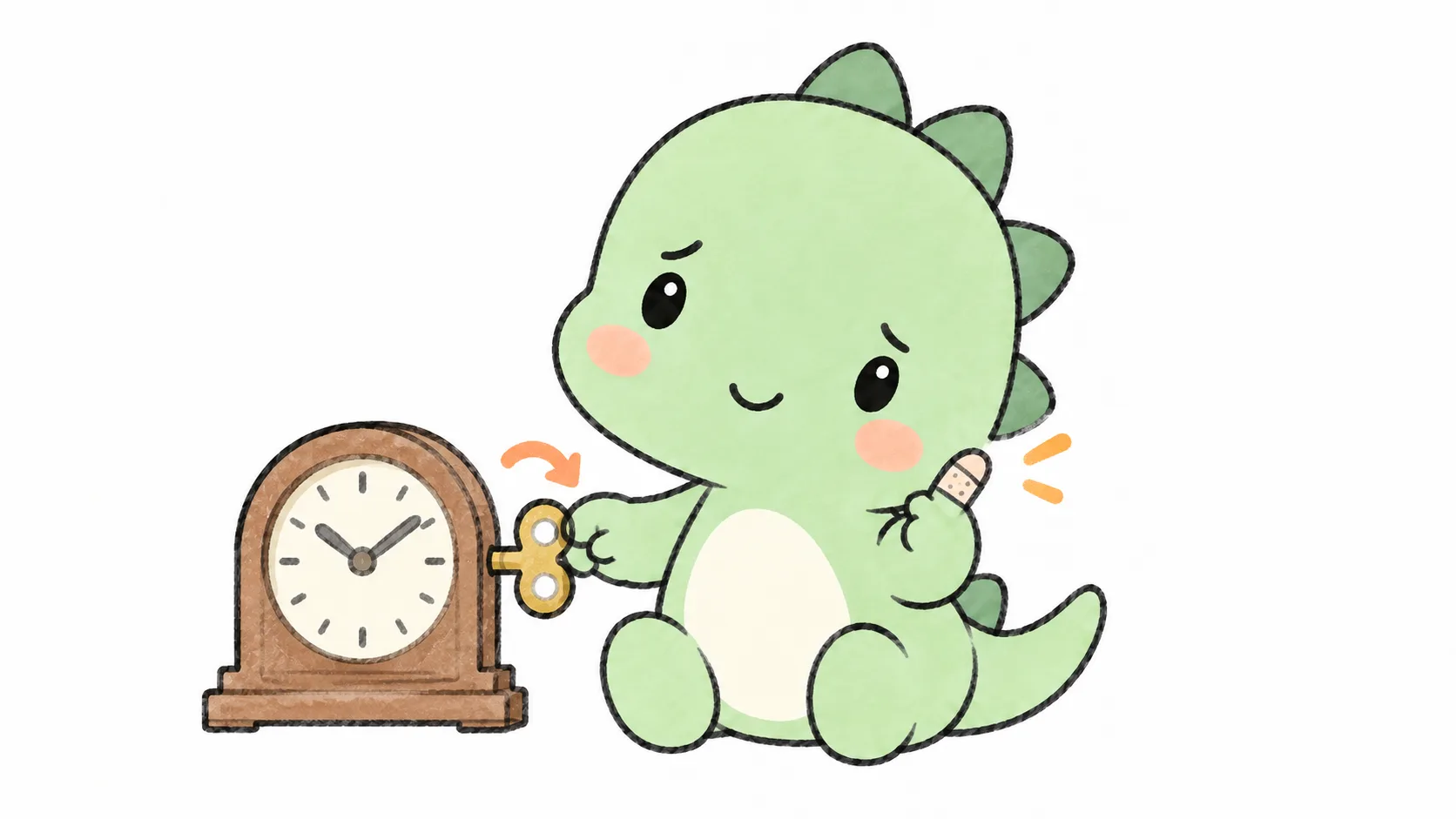
We did not invent that first sentence for this article — it is an answer choice in a Part 1 photograph question in the app's question bank. The same bank also has "Thread is being wound onto a spool." and "A man is jogging along a winding park path." Part 1 loves the passive progressive for describing photos, and wound is exactly the kind of word you can read but fail to recognize by ear: if the sound stored in your head is the /wuːnd/ of an injury, hearing /waʊnd/ stalls the whole sentence.
A sentence that even a synthesized voice got wrong
Part 4 of our question bank has this weather forecast:
A strong storm is expected to move in tonight, bringing heavy rain and winds up to fifty miles per hour.
Seeing winds up, your brain may jump to the phrasal verb wind up (/waɪnd/). Not here: winds is the noun, parallel to rain, and up to fifty miles per hour means "as high as fifty." So it is /wɪndz/.
To be honest, the trap does not only work on people. When we recorded the audio for this article, the synthesized voice read winds in this sentence as /waɪndz/ on its first try — it fell for winds up too. We only noticed after measuring the vowel, and fixed it by specifying the pronunciation directly. Here is the corrected version:
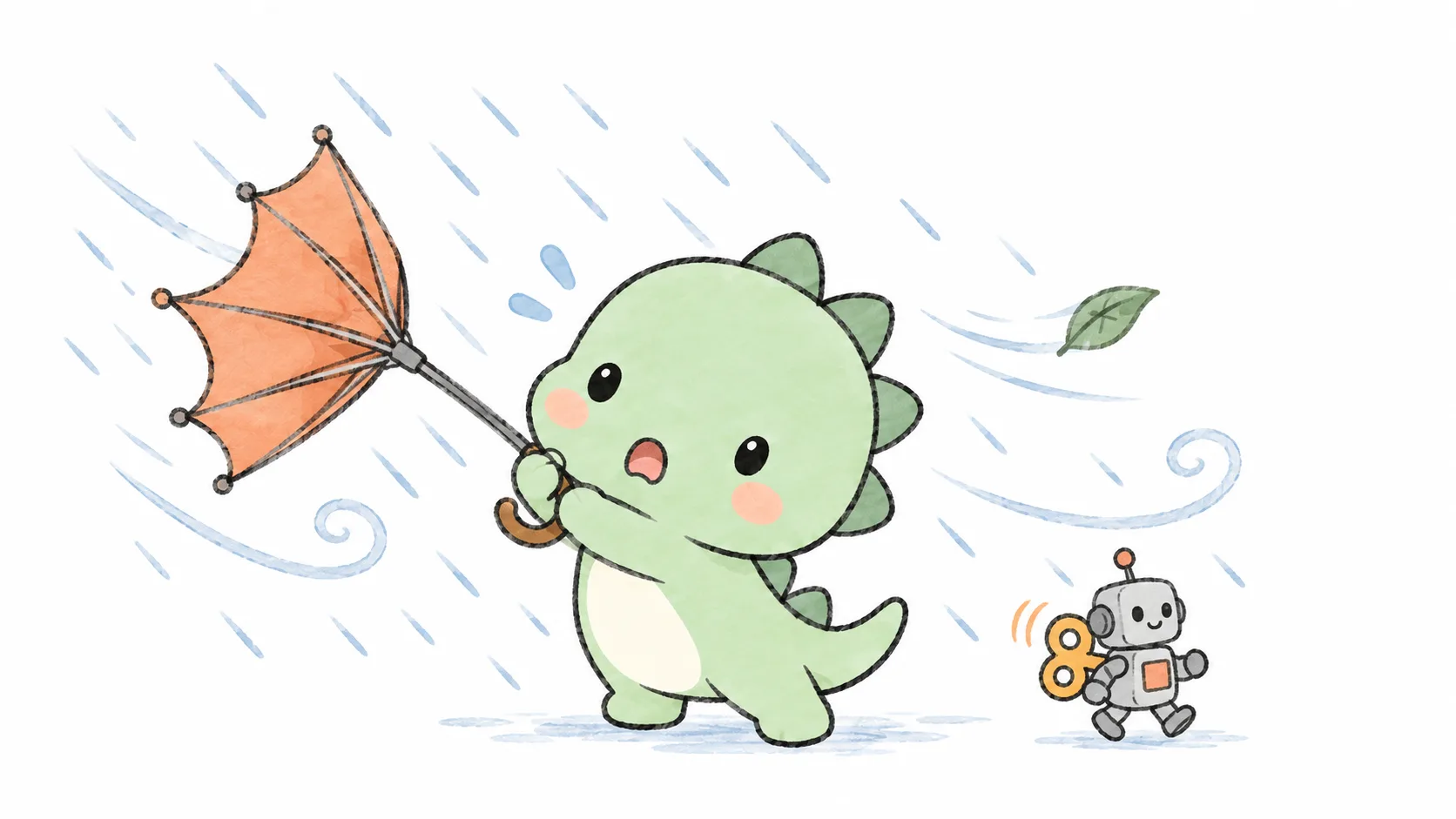
The way to tell is structure, not the words: when wind up is a phrasal verb, wind is a verb and needs a subject (the meeting winds up at five); "rain and winds" is two nouns side by side, and the up to after them belongs to the quantity.
The wind used to be /waɪnd/ too
One last piece of trivia: these two words used to sound the same.
In words inherited from Old English that end in -ind, the vowel lengthened over time — find, kind, mind and blind all have /aɪ/. The wind that blows originally went the same way, which is why it rhymes with kind and mind in old poetry. Shakespeare, in the song in As You Like It, Act 2, Scene 7:
Blow, blow, thou winter wind,
Thou art not so unkind
And not only Shakespeare. John Donne (1572–1631), an English poet of Shakespeare's time and Dean of St Paul's Cathedral in London, who wrote "No man is an island," rhymed wind with mind. Thomas Moore (1779–1852), Ireland's national poet, known for his Irish Melodies and the words of "The Last Rose of Summer," rhymed wind with behind.
In everyday speech, the wind that blows had already switched to today's short vowel, /wɪnd/, in the 18th century — according to the Online Etymology Dictionary, probably under the influence of windy, where the short vowel is natural.
By the time Moore was writing, ordinary speakers had long since changed; he still rhymed it the old way because poetry preserved the older pronunciation. So the two words parted ways because the wind that blows changed its accent. To this day Merriam-Webster keeps a line under that entry: archaic or poetic /waɪnd/.
This is English, so naturally there are exceptions
The dictionary has a fifth entry. The old verb in wind a horn (to blow a horn) is said with either pronunciation, and its past tense can be either winded or wound. It comes from the "air" family but caught its pronunciation from the "turning" family. You will probably never need it, but it shows that these two words have been tangled together for centuries.
wound is not one hundred percent. Under the "turning" verb, Merriam-Webster gives the past tense as wound, "also winded." In practice, when you see winded, nine times out of ten it means out of breath.
In closing: words colliding is everyday English
English is a stew that has been simmering for more than a thousand years: a base of Old English, plus the Norse the Vikings brought, the French the Normans brought, and the Latin and Greek that scholars carried in. With that many sources, pronunciation shifting the whole way, and spelling largely fixed centuries ago, two words that had nothing to do with each other can drift along and collide. bank (of a river) and bank (for money) did; so did bat (for a ball) and bat (the animal).
wind and wind go one better: they are not even loanwords. Both are home-grown Old English, and they collided anyway.
So this whole article comes down to one sentence:
In English, a word may wind up colliding with another word — even when that other word is wind.
(You now know how to pronounce both winds in that sentence.)
Long-press any word in a Handy 990 question to look it up; after answering a listening question you can check the transcript to confirm whether you just heard /wɪnd/ or /waɪnd/. In the same series, How to hear the difference between can and can't and What is the 's in store names? cover two more listening traps where a tiny difference changes the meaning.