All articles · Published 2026-09-16
What is the 's in store names? Macy's is not Macy, and McDonald's is not McDonald
Many English learners swallow the 's at the end of store names: "I went to Macy," "Let's eat at McDonald." It sounds like a tiny tail, but in English Macy is a person and Macy's is the department store. This short piece covers three things: where the 's in a store name comes from (it means "belonging to"), how to pronounce it (three ways, with audio), and why some old British stores later dropped the apostrophe — but kept the s.
Why do learners drop the 's?
One very reasonable cause: the local name often doesn't have it. McDonald's is 麥當勞 in Chinese and マクドナルド in Japanese; the 's disappears in the translation. If the name stored in your head is "McDonald," that is what comes out when you speak English.
On top of that, the 's is only a short /z/ or /s/ in speech — easy to miss when listening, easy to leave off when speaking. The two effects reinforce each other until it drops out of memory entirely.
But for native speakers, leaving off the s changes the meaning.
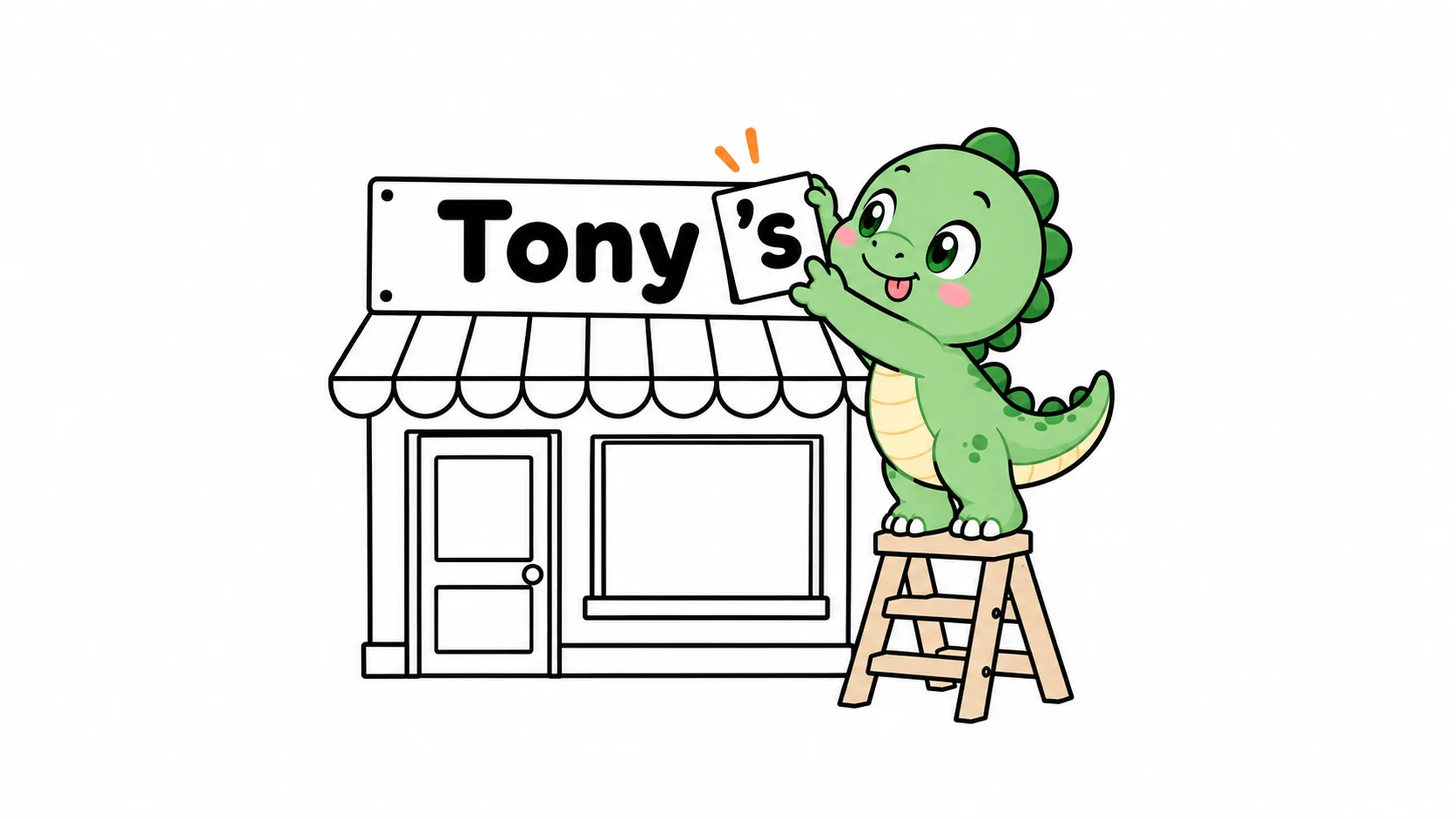
The 's in a store name means "belonging to"
The idea behind Macy's is "Macy's store" — the store belonging to Macy. In 1858 Rowland Hussey Macy opened his store in Manhattan, New York, and the name is simply his surname plus the possessive. McDonald's works the same way: in 1940 the brothers Richard and Maurice McDonald opened their first restaurant in San Bernardino, California — "the McDonalds' place."
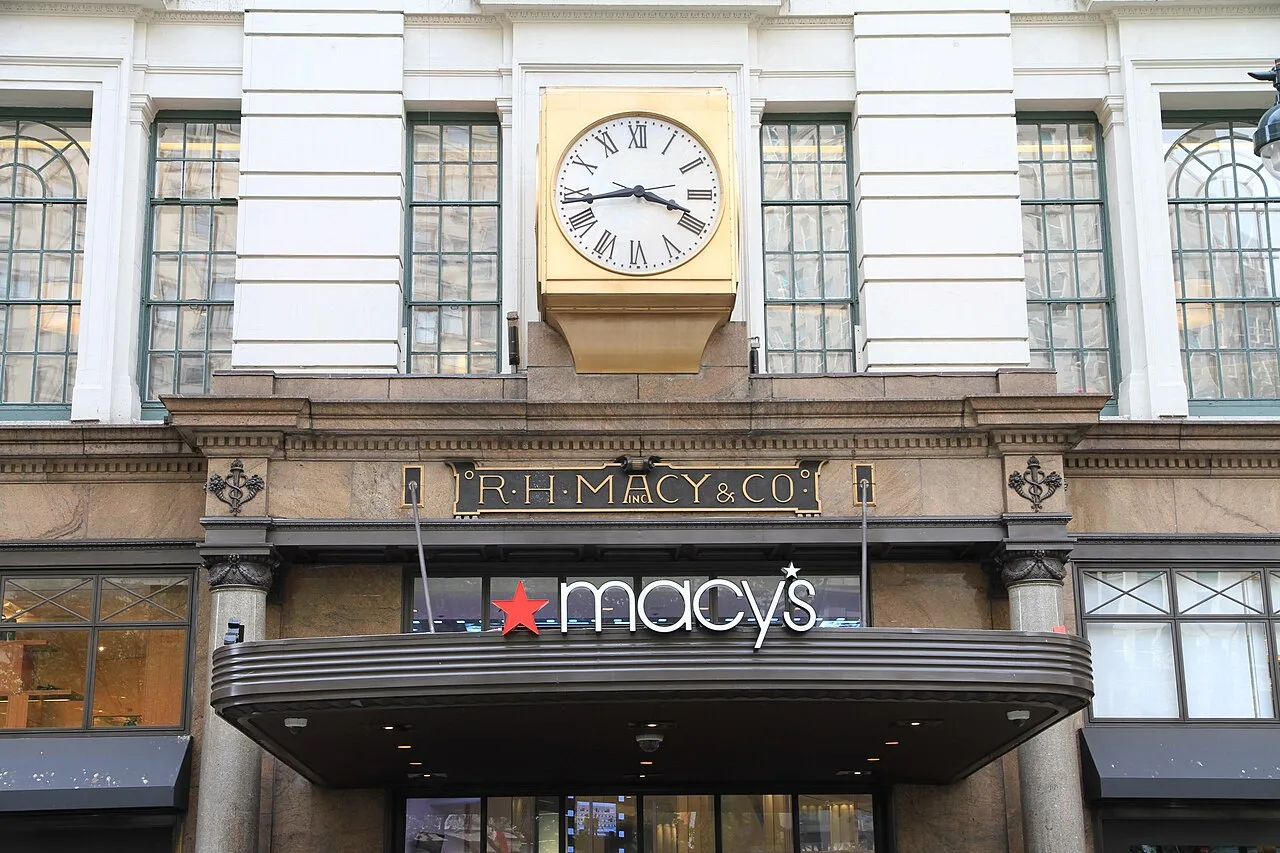
The entrance to Macy's flagship at Herald Square, New York: carved in stone is the founder's name, "R·H·MACY & CO."; below it is today's store name, "macy's" — the person and "that person's store" in one frame. Photo: Ingfbruno, CC BY-SA 3.0, via Wikimedia Commons.

English already does this in everyday speech: after a possessive, the noun can be left out when everyone knows what kind of place is meant. Cambridge Dictionary's grammar guide gives take the cat to the vet's (the vet's clinic) and go to John's after the cinema (John's house). A store name just turns that habit into a sign.
So:
- I work at McDonald's. → I work at the restaurant.
- I work at McDonald. → A native speaker pauses: you work for someone named McDonald?
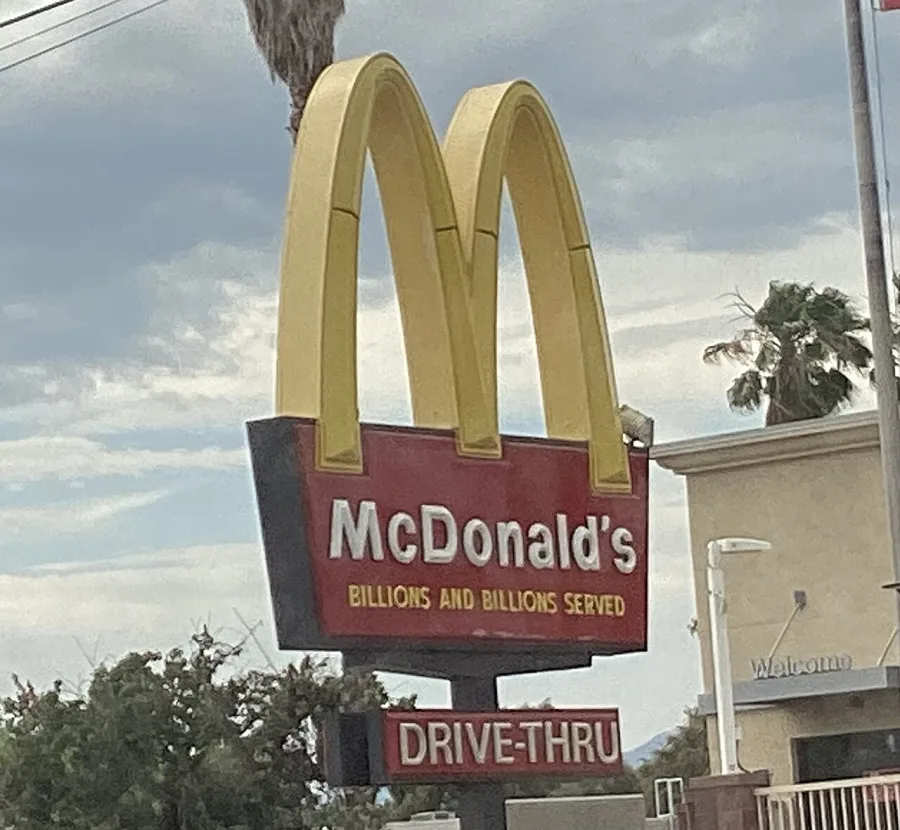
A roadside sign in Redlands, California: McDonald's, apostrophe and s included. Photo: EnDeeDoubleYou, public domain, via Wikimedia Commons.

Listen to how the two names sound — the short /z/ at the end is the 's (all audio in this article is synthesized speech from Azure, not a human recording):
How do you pronounce the 's? Three ways
Like the plural s, the possessive 's changes with the sound before it:
| Sound before it | 's is pronounced | Examples |
|---|---|---|
| A vowel or voiced consonant (y, n, d…) | /z/ | Macy's, McDonald's, Tony's |
| A voiceless consonant (k, t, p…) | /s/ | Frank's, Mark's |
| A hissing sound such as s, z, sh, ch | /ɪz/, one extra syllable | Grace's, Rich's |
Have a listen. All three are the kind of store-name sentence TOEIC listening uses all the time — pay attention to the little 's:
's store names on the TOEIC
TOEIC listening and reading love "a name + 's + the kind of shop" for their fictional businesses. The official TOEIC sample test has a clothing store, Develyn's Boutique, in the reading section, and an article about the restaurant chain Pablo's being acquired — which now has "over 50 Pablo's."
Look at that phrase: more than fifty restaurants, and it is still Pablo's — not Pablos, not Pablo'ses. The 's is part of the name; the plural is left to context (or to a noun after it, like restaurants).
A practical listening clue: when you hear "at + a name + 's," as in Let's meet at Tony's, it almost always means a place (a shop, a restaurant, someone's home), not a person.
The other way round: stores that dropped the apostrophe
A few old British names went in the opposite direction:
- Harrods: called Harrod's in the 19th century, after founder Charles Henry Harrod; the apostrophe disappeared for good around 1920.
- Selfridges: Selfridge's when it opened. According to Londonist, after founder Harry Gordon Selfridge was forced out of his own company in the 1930s, the apostrophe was removed too — the store was no longer "his."
- Waterstones: the British bookshop chain dropped its apostrophe in 2012. Managing director James Daunt argued that, in a world of URLs and email addresses, the spelling without an apostrophe was more practical. The British press had quite a row about it.
But note: what they dropped was the apostrophe, not the s. Harrods did not become Harrod, and Waterstones did not become Waterstone. With or without the apostrophe, that final s still gets pronounced.
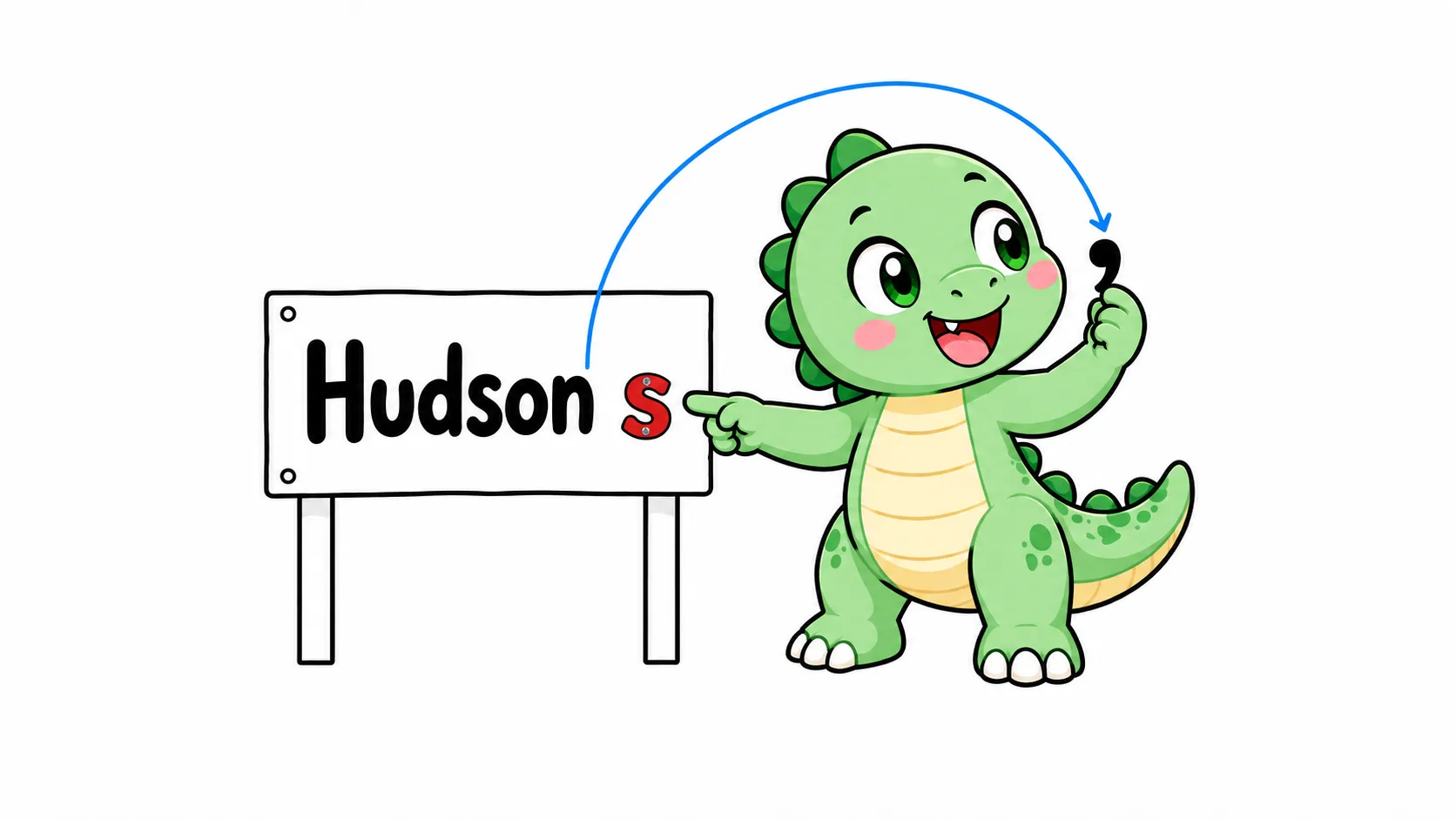
By the way, Starbucks never had an apostrophe — the name comes from Starbuck, the first mate in Moby-Dick, but it was never "Starbuck's store." You still can't leave off the s.
And here come the exceptions, as usual
Not every 's store name has a real person behind it. Some are the founder's surname, some are a family member's or an invented character's name, and some just sound friendly. "'s = someone's store" describes where the pattern comes from; it doesn't mean every store has a person you can look up.
Spelling is the brand's own choice. Apostrophe or not, and where the s goes, follow the brand's official spelling — grammar rules can't predict it. When in doubt, check the sign or the official website.
There are no statistics on dropping the 's. This article describes a common habit, not a research finding; we have not counted how many people do it.
Long-press any word in a Handy 990 question to look it up; after answering a listening question, you can check store and personal names against the transcript. In the same series, How to hear the difference between can and can't covers another listening trap where one letter flips the meaning, and theatre is not a typo covers British and American spelling.