
All articles · Published 2026-09-16
How to hear the difference between can and can't: English hides "not" in a t nobody pronounces
In many languages, "not" gets a full syllable of its own, and it is hard to miss. In English, the whole negative in can't rides on the final t — and Americans usually don't pronounce it. This piece covers three things: what actually separates can from can't in an American accent (stress, not the t); why British and Australian accents make it much easier (the vowel changes completely); and the exceptions that break the rule. Audio examples in American, British, and Australian accents are included so you can hear each point.
can, can't, can — in one breath
Questions 32 to 34 of the official TOEIC sample test are a complaint call. A woman with an American accent says the coffee maker she bought online has stopped working, but the warranty has only just expired. The man answering, who has an Australian accent, says can, then "we can't replace it," then can again — and offers her a coupon for forty percent off her next purchase.
Three nearly identical words meaning "yes, no, yes." Question 34 asks what the man offers to do, and the answer is a discount. But if you hear that middle can't as can, you think the store has agreed to send a new machine. There is no replacement option among the answers, so you start wondering whether it was "extend a warranty" or "issue a refund," and the coupon stops making sense.
This is not an obscure trap. Can is one of the most common auxiliary verbs in English, and can/can't is probably the pair learners mix up most often. The cause is structural: many languages put "not" in front as a whole syllable; English tucks it onto the end as a single consonant. "Able" and "not able" differ by a word; can and can't differ by one letter.
And that letter often isn't pronounced at all.
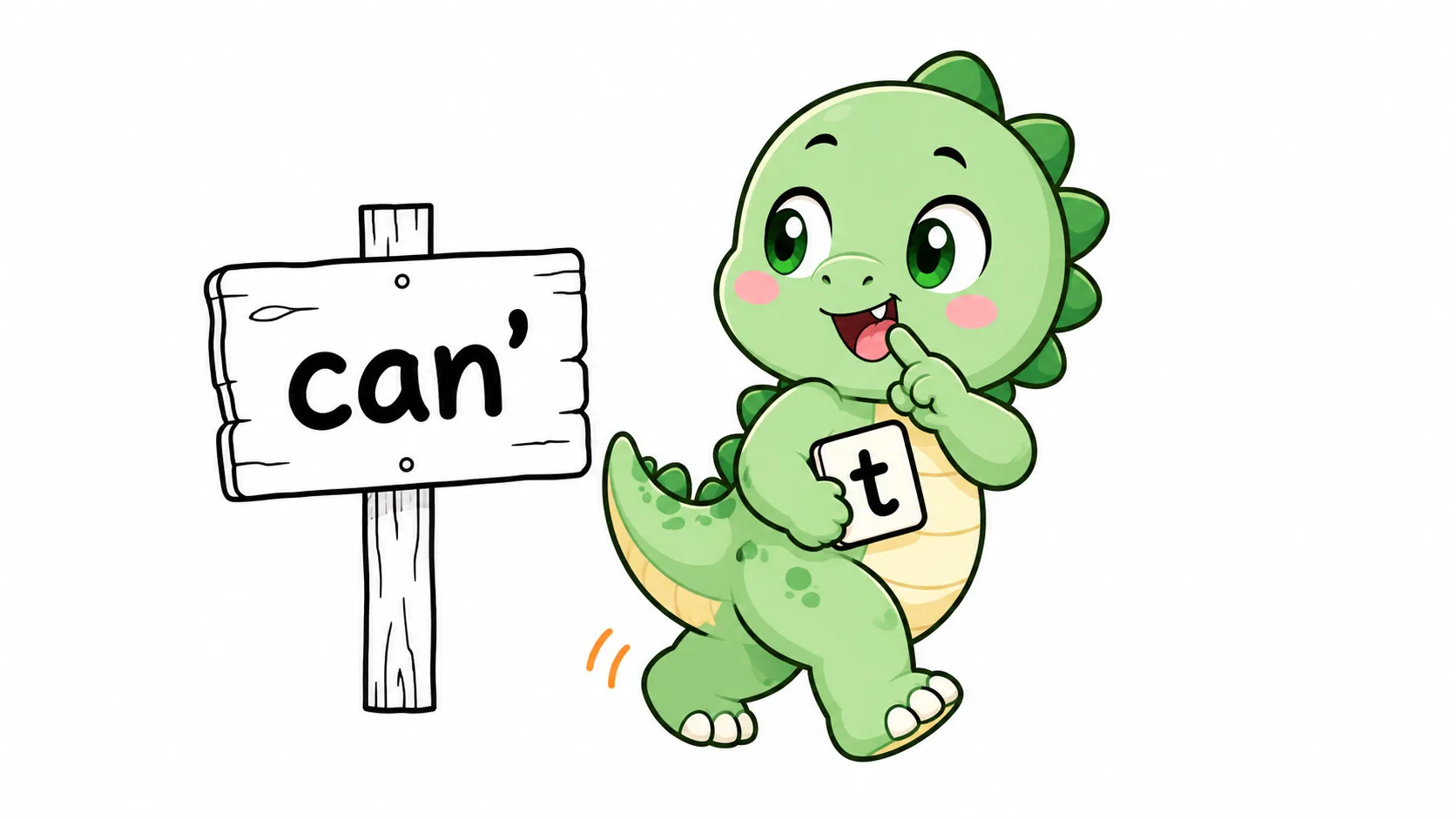
Why can't you hear the t in can't?
On the page, can't ends in a clear t. In ordinary American speech, that t rarely gets released. The tongue moves into position, or the throat closes briefly, the airflow stops — and there is no audible "t" burst. When a consonant follows — can't go, can't make, can't find — the t all but disappears.
So if your strategy is "listen for a t at the end," you are waiting, in an American accent, for a sound that isn't coming.
How do Americans tell the two apart, then? They say can and can't hundreds of times a day and rarely mishear. The answer: they don't rely on the t.
American accents: stress separates can from can't
The key is a phenomenon called weak forms. A set of function words in English — a, the, to, and, can — shrink to a short, blurred vowel when they are not emphasized. Peter Roach lists can among these words in English Phonetics and Phonology (2009, 4th ed., Cambridge University Press): unstressed, it takes its weak form; stressed or at the end of a sentence, it is pronounced in full.
Can't is not on that list. The negative is the most informative part of the sentence, and speakers naturally put weight on it.
So what you actually hear is this:
| Sentence | What it sounds like |
|---|---|
| I can go. | "I kn GO" — can shrinks to a quick "kn," and the stress lands on go |
| I can't go. | "I KAN'T go" — can't is full, open-mouthed, and stressed, even if the t is missing |
Listen to both. They differ by one letter, but don't listen for the ending — listen for how heavy the word in the can slot is:
(All audio in this article is synthesized speech from Azure, not a human recording.)
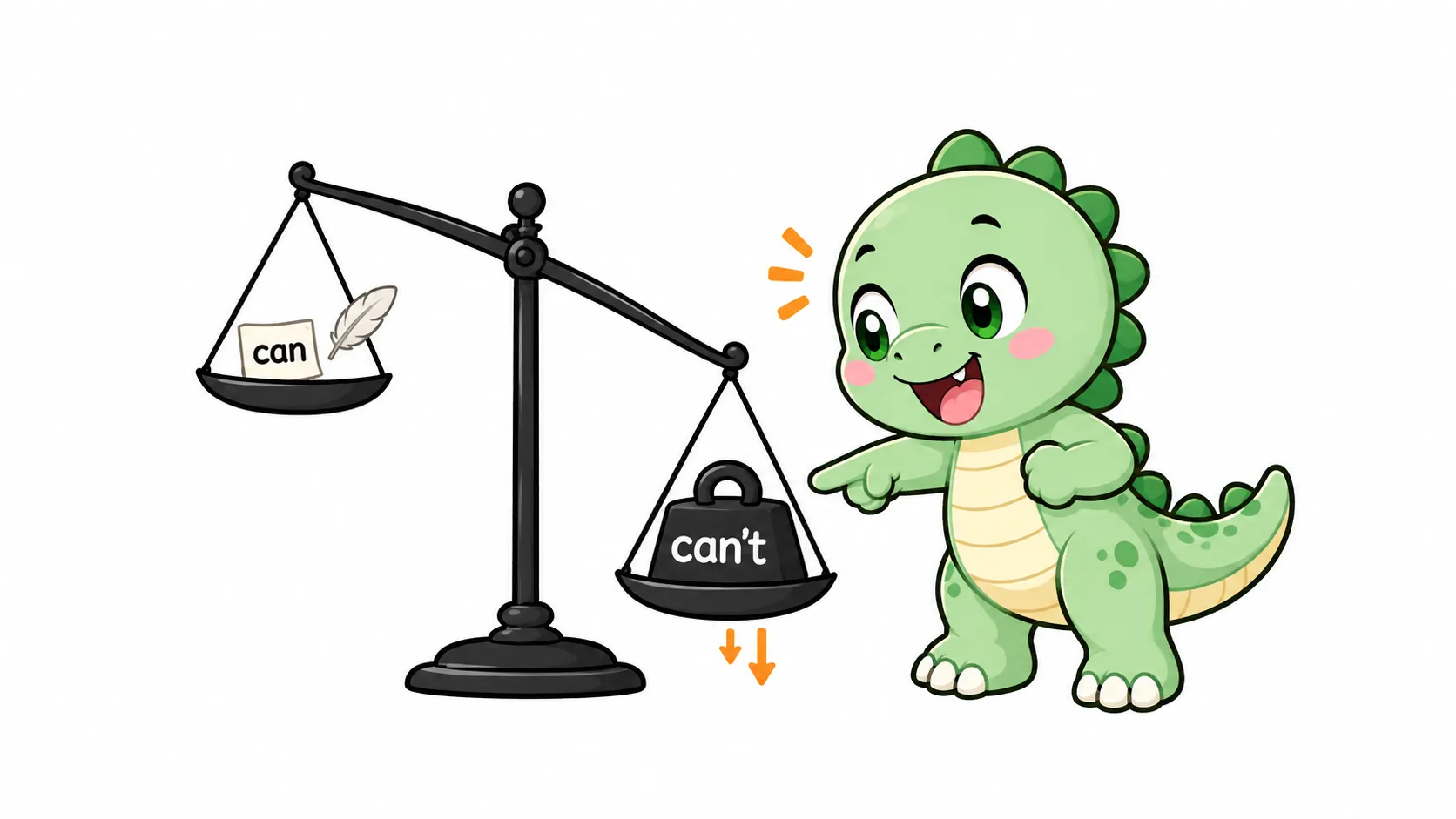
In other words, the real signals in an American accent are:
- A light, short, blurred "kn" → probably can.
- A clear, full, open "kæn" carrying the sentence stress → probably can't.
This is counterintuitive: the one that sounds more complete is usually the negative. Many learners have trained their ears the wrong way round — they hear a clear can and decide it's positive, because "there was no t."
Three exceptions that break the rule
The stress rule works well in ordinary statements, but in three situations positive can is also pronounced in full:
1. can at the end of a sentence. "Yes, I can." "They can if they want." There is no verb after can to carry the stress, so can has to carry it. It then sounds a lot like can't — but sentence-final can usually shows up in short answers or contrasts, and context makes it clear. Listen to the next clip: both the Can that opens the question and the can at the end sound fuller than the one in "I can go":
2. Deliberate emphasis. "I don't have to do it, but I can." When the speaker wants to stress "I'm able to," can gets weight. These sentences usually have a visible contrast — but, actually, of course — and the contrast itself is the clue.
3. At the start of a question. In "Can you send me the file?" the opening can is sometimes weak and sometimes not. A negative question like "Can't you send me the file?" often means "why won't you just…" — a little pushy or annoyed. TOEIC Part 2 likes this kind of question; the point there is less telling can from can't than hearing the tone.
British and Australian accents: the vowel itself changes
Now the good news: if the speaker is British, most of the problem goes away.
In a standard British accent, can't has a long, open "ah" — something like "kahnt," with a light t at the end. Positive can still weakens to "kn," or, when pronounced in full, a short "kæn." One is short and flat, the other long and open; you can tell them apart even if the t is completely inaudible.
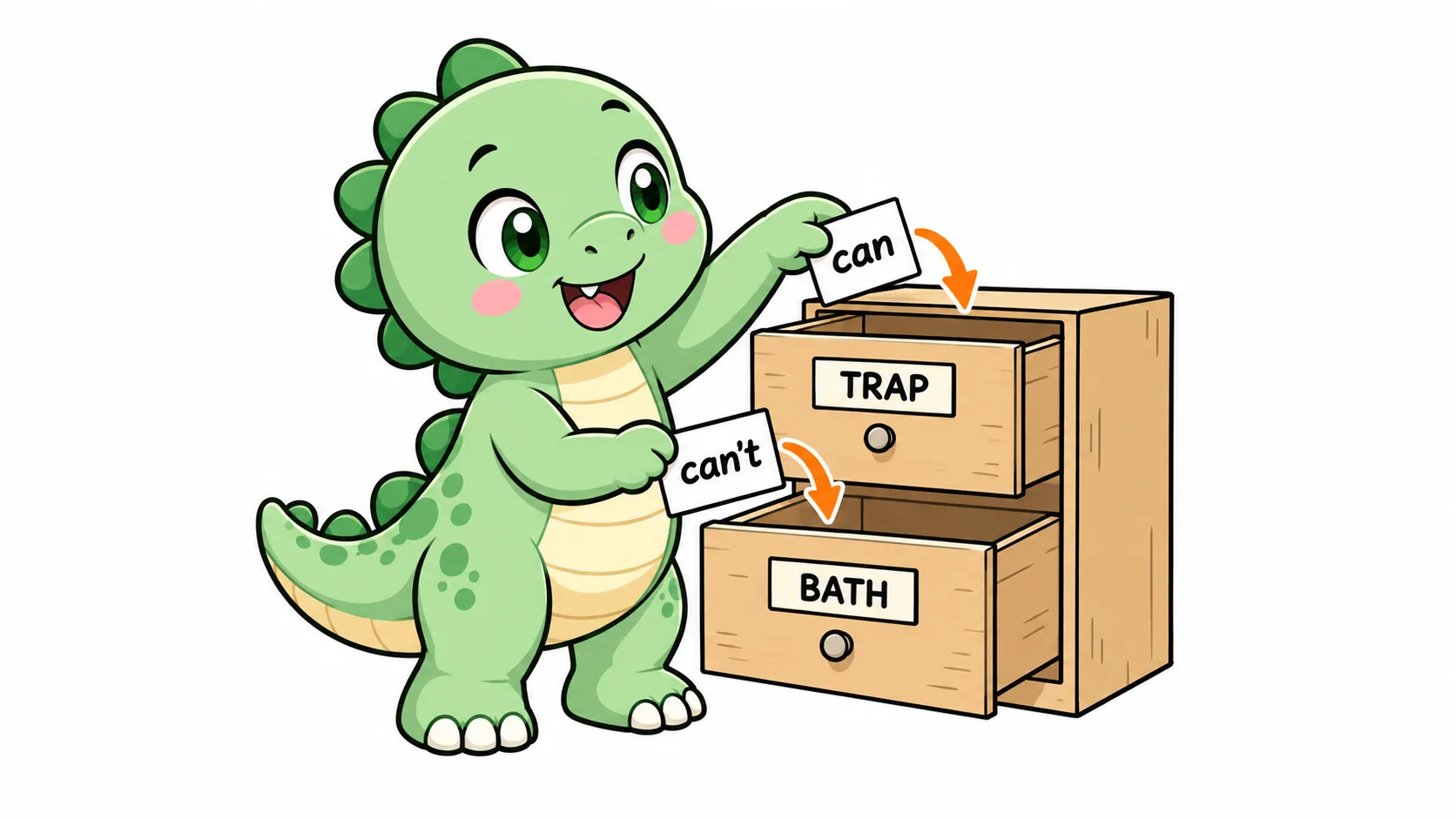
This difference has a name. In Accents of English (1982, Cambridge University Press), the phonetician John Wells sorted English words into "lexical sets" by vowel. The TRAP set (cat, bad, man) and the BATH set (bath, after, staff, can't) share one vowel in American accents but split in the standard accent of southern England, where the BATH words take the long "ah." Can belongs to TRAP, can't to BATH — the same root, filed in two different drawers.
Australian accents side with the British here: can't is long, and easy to tell from can. Interestingly, Australians themselves are not consistent in words like dance, chance, and plant — some use a short vowel like Americans, some a long one like the British, and it varies by region — but can't mostly comes out with the British-style long vowel.
A Canadian accent handles can't essentially like an American one, so the stress rule applies.
This explains a common experience: many learners find British accents "harder," but on can versus can't, British and Australian accents are actually on your side. The accent that causes the trouble is the American one many of us grew up hearing.
How does this show up on the TOEIC listening test?
The TOEIC never asks "was that word can or can't?" It tests whether you got the meaning of the whole sentence — and can't is often the hinge of that sentence. Three practical observations:
A "no" is usually followed by a fix. Back to that phone call: the agent says the store can't replace the machine and offers a coupon in the same sentence. In spoken English, "I can't" is almost always followed by "but what I can do is…" — although, but, instead. If you hear an alternative being offered, work backwards: there was probably a can't just before it. We wrote a sentence modelled on that call and recorded it in American and Australian accents — with can't and can side by side in one sentence, the contrast is at its clearest:

The answer choices paraphrase. When the conversation says can't, the correct option rarely repeats it; common rewrites are unable to, not able to, not possible, not available. The flip side: be wary of options that copy words from the conversation. In that same call, warranty is said twice, and option (C) is "Extend a warranty"; the correct answer, "Provide a discount," uses not one word from the conversation — it is a paraphrase of "coupon for forty percent off."
Work out who is speaking first. A single test mixes American, British, Australian, and Canadian accents. If you can tell the speaker is British or Australian, the long vowel in can't practically gives the answer away; if the accent is American or Canadian, shift your attention to stress.
How to train your ear: Accent Training in the app
Understanding the rule is one thing; your ear still needs practice. Accent Training in Handy 990 is built for exactly these "almost the same" sounds, in three units:
- Accent Compare: the same sentence, switched between American, British, and Australian accents. Its "The BATH vowel" unit collects words like staff, after, and can't — the best place to hear the long "ah" this article describes.
- Accent Listening Quiz: hear a sentence and pick it out of four nearly identical ones. In some questions the options differ by a single t — The vendor can't deliver the samples before Friday, or The vendor can deliver the samples before Friday.
- Accent ID: hear a sentence and guess the accent. Once you can tell the accent, you know whether to listen for the vowel or for the stress.
A few minutes a day is enough. Once you hear the difference between "kn" and "kahnt" without thinking, can and can't stop being a guess.
What not to take on trust
Accents are not three tidy regions. "British accent" here means the standard accent of southern England; accents vary a great deal within the UK, and not every region follows this table. Some Americans do pronounce the t clearly, especially when speaking slowly and carefully. "Australians mostly use the long vowel" means mostly, not always.
The stress rule is a tendency, not a law. In fast, flat speech, or when the sentence stress falls on another word, can't can be squeezed very light too. Then context is the only reliable guide.
We did not do acoustic measurements. This article describes the consensus of phonetics textbooks plus a real example from an official sample test; we did not record and analyze real speakers' durations or pitch, and we have no statistics on the official test bank. The audio here, like the audio in the app's Accent Training, is synthesized: good for demonstrating and training your ear, not good enough to count as phonetic evidence.
"kn" and "kahnt" are approximations. Writing English sounds with other letters always distorts them; the point is to remember "one short and flat, one long and open," not to pronounce from the spelling.
Finally, back to that Australian agent. When he said we can't replace it, he probably never imagined anyone would write a whole article about that t. But for someone in a test room who gets to hear it exactly once, the t nobody pronounced is worth it.
Accent Training in Handy 990 lets you switch the same sentence between American, British, and Australian accents, and both its BATH vowel and Mixed practice units include can/can't contrast questions. For the difference between British and American spelling, read theatre is not a typo.